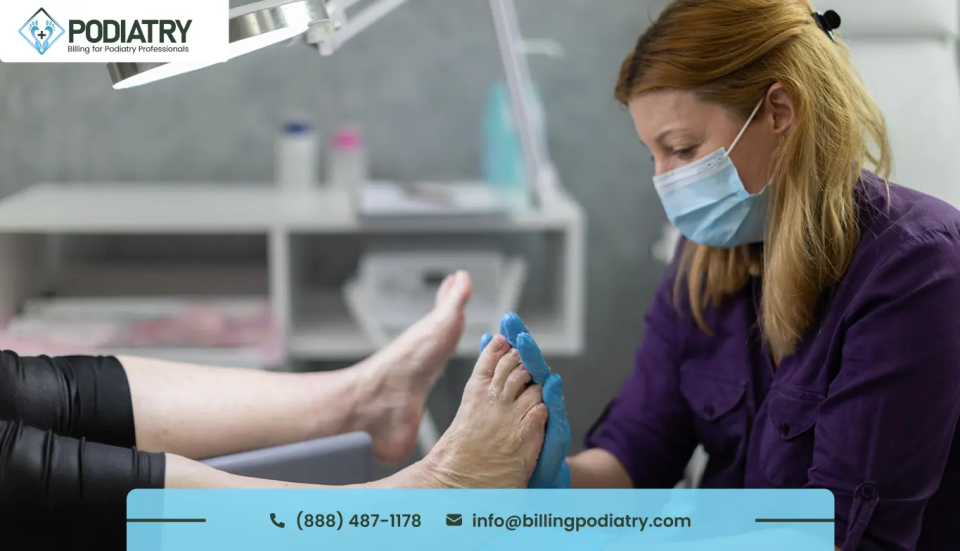
In the modern podiatric landscape, the treatment of chronic, non-healing wounds has been revolutionized by the development of Cellular and/or Tissue-Based Products (CTPs). Traditionally referred to as skin grafting. The application of these advanced biological scaffolds derived from human amniotic, bovine, or porcine sources is now a standard of care for limb salvage and closure of complex diabetic foot ulcers (DFUs).
However, the clinical success of a graft is only half the battle. Because these biological materials are among the most expensive supplies a podiatry practice will ever purchase, administrative precision is non-negotiable. Accurate CPT coding is the bridge between providing life-changing clinical care and maintaining a viable business.
This guide is designed to help you navigate the complexities of the 15271–15278 code series, ensuring your practice maximizes legitimate revenue while insulating itself against the high audit risks associated with wound care. By mastering these codes, you ensure that your focus remains where it belongs: on the patient’s recovery, not on a pile of denied claims. Without further ado, let’s delve deep into this topic.
Understanding the Anatomy of a Grafting Claim
It is important to understand how payers evaluate podiatric wound care billing and reimburse for rendered foot care services. To file a clean claim, a podiatrist must distinguish the type of material used and exactly where it was applied on the body. In the eyes of an insurance payer, a “graft” is not a one-size-fits-all term. Similarly, it’s useful to know the difference between autograft and skin-substitute graft application codes.
The Difference Between Autografts and Skin Substitutes
In traditional surgery, an autograft involves harvesting healthy skin from the patient (the donor site) and moving it to the wound (the recipient site). While effective, this creates a second wound for the podiatric patient to heal.
Because of this, podiatrists primarily use Cellular and/or Tissue-Based Products (CTPs), often called skin substitutes. For these products, you must use the 15271–15278 series.
Why this series?
These codes specifically describe the application of skin substitute grafts. Unlike autograft codes (which include the surgical “harvesting” of skin), the 15271–15278 series assumes the graft material is provided in a pre-packaged, sterile form. If you use a biological product like Apligraf or Grafix, billing an autograft code is a “red flag” error that will lead to an immediate denial.
The Importance of Site Specificity
One of the most unique aspects of skin grafting CPT codes for podiatry is that they are grouped by anatomical location. The work involved in grafting a flat area like the trunk is considered different from grafting a complex, contoured area like a toe.
For the podiatrist, the world is divided into two code ranges:
- 15271–15274: Used for the Trunk, Arms, and Legs. (Note: This includes the leg above the ankle).
- 15275–15278: Used for the Feet and Toes. (This also includes hands and fingers).
The Common Mistake
If a podiatrist treats a wound on the ankle or the top of the foot but mistakenly uses the “Leg” code (15271), they are committing an “unbundling” or “mismatch” error. Site specificity is the first thing auditors look for to ensure the code matches the diagnosis (ICD-10) code for the foot.
Navigating the 15271–15278 Series
Choosing the correct code within the 15271–15278 series requires a two-step verification: location and surface area. Because these codes are “tiered,” billing incorrectly can lead to significant underpayment or audit flags.
Why 15275 is the “Podiatry Gold Standard”
For the vast majority of podiatric procedures involving the foot and toes, the 15275 CPT code series is your primary tool. It is designed specifically for high-complexity, contoured areas.
CPT 15275 (The Base Code)
This code covers the application of a skin substitute graft to the foot, toe, or hand for the first 25 sq cm of wound surface area. The key rule is that even if the wound is only 1 sq cm, you still use 15275. It is the “entry” code for any graft on the foot.
CPT 15276 (The Add-on Code)
This is used for larger wounds. It covers each additional 25 sq cm (or part thereof). So in wound debridement billing podiatry, if the skin graft only covers 25 sq cm without using additional garft the CPT code 15275 will be used. Otherwise, CPT 15276 will be used if the graft requirements exceed the baseline mark.
Example: If a diabetic foot ulcer measures 30 sq cm, you would bill 15275 for the first 25 sq cm and 15276 for the remaining 5 sq cm.
When to Use 15271 (Trunk, Arms, Legs)
The most common mistake in podiatry billing is using 15275 for every wound the doctor treats. However, the CPT manual is very strict about the “Ankle Line.”
The “Above the Ankle” Rule
If a patient has a venous leg ulcer located on the shin or calf (above the malleolus/ankle bone), you cannot use 15275. Instead, you must use CPT 15271.
- CPT 15271: Application of skin substitute graft to trunk, arms, or legs (first 25 sq cm).
- CPT 15272: Add-on code for each additional 25 sq cm on the leg/trunk.
Why it matters
15275 (Foot) typically has a higher relative value unit (RVU) than 15271 (Leg) because grafting the foot is considered more technically difficult. If you bill 15275 for a wound that the ICD-10 code describes as being on the “lower leg,” an automated payer system will flag the claim for a “mismatch,” leading to an immediate denial.
CPT 15271 vs 15275 Use Summary
| Location | Base Code (First 25 sq cm) | Add-on Code (Each Add’l 25 sq cm) |
| Foot, Toe, Ankle | 15275 | 15276 |
| Leg (above ankle) | 15271 | 15272 |
The “Supply” Factor: Billing for the Graft Material
One of the biggest misconceptions in podiatric billing is that the 15275–15278 series covers the cost of the skin substitute itself. It does not. Those CPT codes only represent the “work” of the physician. To avoid losing thousands of dollars in overhead, you must bill for the material separately.
Utilizing Q-Codes
Graft materials (CTPs) are billed using HCPCS Level II codes, commonly known as “Q-codes.” If you apply a graft but fail to include the corresponding Q-codes for skin substitutes in your claim, you are essentially giving the material away for free.
The Application (CPT): Reimburses the doctor for the surgical work.
The Material (Q-Code): Reimburses the practice for the cost of the product.4
Common Podiatric Q-Codes include
- Q4101: Apligraf (per sq cm)
- Q4106: Dermagraft (per sq cm)
- Q4131: Epifix (per sq cm)
Unlike CPT codes, which are billed in 25 sq cm blocks, most Q-codes are billed per square centimeter. If you use a 16 sq cm piece of Apligraf, you must list “16” in the units column for Q4101.
“Invoice Cost” vs. MAC Allowables
Before purchasing or applying a specific skin substitute, it is vital to understand what your Local Medicare Administrative Contractor (MAC) will pay.
MAC Allowables
Every region has a MAC (such as Novitas, First Coast, or NGS) that sets a maximum “allowable” price for each Q-code.
The Gap
If your practice pays $1,500 for a graft but the MAC allowable is only $1,200, your practice will lose $300 on every application. Always check your MAC’s current Average Sales Price (ASP) file, which is usually updated quarterly. Comparing your invoice cost against the ASP ensures that your wound care protocols are both clinically effective and financially sustainable.
The Debridement Debate: To Bundle or Not to Bundle?
In any grafting procedure, the wound must be cleaned before the material is applied. However, there is a massive difference in the eyes of CPT between “cleaning” a wound and “debriding” it. Let’s understand this difference a little better.
Routine Preparation vs. Surgical Debridement
The 15271–15278 code series explicitly includes “routine” wound preparation. This means you cannot separately bill for simply washing the wound, removing loose debris, or wiping away superficial exudate. However, Surgical Debridement (CPT 11042–11044) may be billable alongside a graft if specific criteria are met:
The Clinical Standard
The debridement must be a significant, separate, and medically necessary procedure performed to prepare a clean “bed” for the graft. This usually involves removing necrotic tissue, biofilm, or infected bone/tendon that extends beyond the superficial layer.
- The Codes: * 11042: Debridement, subcutaneous tissue (first 20 sq cm).
- 11043: Debridement, muscle and/or fascia.
- The Catch: If the podiatrist is simply “freshening” the edges of a clean wound to encourage bleeding, this is usually considered bundled into the graft application code.
Modifier 59 and Surgical Necessity
To get paid for both the debridement and the graft in the same session, you must prove to the insurance payer that these were two distinct services. This is achieved through Modifier 59 (Distinct Procedural Service).
How to Document for Success
To survive an audit when using Modifier 59, your clinical note must reflect the following:
Separate Heading: Document the debridement in its own section of the operative report.
Specific Methodology: Clearly state how the debridement was performed (e.g., “Sharp excisional debridement using a #15 blade”).
Depth and Tissue Type: Explicitly name the tissue removed (e.g., “Necrotic subcutaneous fat”) and the final dimensions of the wound after debridement.
Clinical Justification: Explain why the debridement was necessary (e.g., “To remove hyperkeratotic borders and bacterial biofilm that would otherwise prevent graft integration”).
Bottom Line
If your notes just say “cleaned wound and applied graft,” billing for debridement is a compliance risk. If your notes show a “significant and separate” surgical effort to clear infection or necrosis, the use of Modifier 59 is justified.
Essential Modifiers for Podiatry Claims
Podiatry skin substitute modifiers act as extra instructions for the insurance payer’s computer system. In podiatry, where we often treat multiple small areas on different parts of the foot, these modifiers are what prevent your claims from being flagged as “duplicate billing.”
Anatomical Modifiers (T1–T9, TA)
Because a podiatrist might apply a skin substitute to a wound on the great toe and another on the fifth toe during the same session, anatomical specificity is vital.
- The T-Modifiers: These specify which toe is being treated.
- TA: Left foot, great toe.
- T1–T4: Left foot, second through fifth toes.
- T5: Right foot, great toe.
- T6–T9: Right foot, second through fifth toes.
Why they matter
If you bill CPT 15275 twice because you grafted two different toes, the insurance company will deny the second line as a duplicate. By appending TA to the first line and T5 to the second, you are signaling that these are two distinct procedures on different anatomical sites.
Modifier JC and JD
When billing for the high-cost graft material itself (the Q-code), Medicare and many private payers require specific modifiers to account for every square centimeter of the product you purchased.
Modifier JC (Skin substitute used as a graft)
This is appended to the Q-code to represent the actual amount of material that was placed onto the patient’s wound.
Modifier JD (Skin substitute not used as a graft)
This is the “waste” modifier. Because many skin substitutes come in fixed sizes (e.g., a 2×2 cm square), you often end up with leftover material after trimming to fit the wound.
Example: If you open a 4 sq cm graft but only use 3 sq cm on the patient, you would bill 3 units with modifier JC and 1 unit with modifier JD. To bill for waste (JD), your documentation must explicitly state that the remaining material was discarded and cannot be used on another patient. Failing to report waste correctly is a common trigger for “over-utilization” audits.
Avoid These Common Podiatric Coding Pitfalls
Even with the correct codes and modifiers, a claim can still fail during an audit if the underlying logic doesn’t meet payer standards. Two of the most common traps involve how we measure wounds and how we justify the procedure to Medicare.
The 1% Rule (Surface Area Calculation)
The most common mistake in wound care billing is assigning a CPT code based on the size of the graft material used. However, CPT guidelines are very clear: Reimbursement is based on the size of the recipient site (the wound), not the size of the product.
The Rule
You must measure the wound after debridement is complete. This measurement dictates which “25 sq cm” block you bill.
The Pitfall
If you open a large 10 sq cm graft to cover a small 2 sq cm ulcer, you must bill CPT 15275 based on the 2 sq cm wound.
The “Waste” Connection
The extra 8 sq cm of material is not billed as part of the procedure; instead, it is accounted for using the JD modifier (waste) on the supply line, as discussed in the previous section.
Neglecting Local Coverage Determinations (LCDs)
LCD guidelines for podiatry grafting are a set of “house rules” created by your regional Medicare contractor (MAC). Many podiatrists apply a graft as soon as they see a difficult wound, but Medicare often requires proof of “Failed Conservative Therapy” first.
The 4-Week Rule
Most LCDs require at least four weeks of documented standard wound care (SOC) before they will pay for a high-cost skin substitute. This includes:
- Offloading (e.g., surgical shoes, CAM boots).
- Infection control.
- Moisture management.
- Nutritional assessment.
The Pitfall
If you apply a graft on the patient’s second visit without documenting that standard care failed for the preceding month, the payer may deem the procedure “not medically necessary” and claw back the entire payment.
The best practice is to always keep a copy of your MAC’s specific LCD for “Skin Substitutes” in your billing office. It lists exactly which diagnosis codes (ICD-10) are covered and what documentation must be in the chart before the first graft is applied.
Documentation Checklist for the Podiatrist
To ensure your grafting claims are paid and retained during an audit, every procedure note should be a clear “map” of the service provided. Use this “Quick Check” list before finalizing your surgical or office notes.
The Podiatric Grafting “Cheat Sheet”
Wound Dimensions (Post-Debridement)
Always record the length, width, and depth of the wound after you have performed the surgical preparation. Remember, CPT 15275 is billed based on the recipient site area, not the size of the graft out of the package.
Product Specifics (Name, Lot, and Expiration)
For each application, you must document the specific CTP brand used (e.g., Grafix, Epifix) and the unique lot number. This is vital for both product tracking (in case of recalls) and for justifying the specific Q-code billed.
Statement of Medical Necessity
Explicitly state why the graft is being applied today. Reference the “Failed Conservative Therapy” (the 4-week rule).
Example: “Despite 4 weeks of standard offloading and moisture management, the ulcer has failed to reduce in size by 50%, necessitating the use of a biological scaffold.”
Specific Anatomical Site
Don’t just say “the foot.” Be precise (e.g., “plantar aspect of the left great toe”) to support your T-modifiers and to differentiate from other potential wounds.
Waste Documentation (The JD Modifier)
If you use a 4.0 sq cm graft on a 2.5 sq cm wound, you must document the fate of the remaining 1.5 sq cm.
Example: “A 4.0 sq cm graft was opened; 2.5 sq cm was applied to the wound, and the remaining 1.5 sq cm of unused material was discarded in the presence of a witness.”
Why These Details Can Save Your Practice
Insurance adjusters look for “gaps” in the story. If you bill for 10 units of a product but your note only mentions a “small ulcer,” they will flag the claim for “over-utilization.” This checklist ensures that the CPT code, the Q-code, and the Clinical Narrative all tell the same story.
Conclusion
Mastering grafting CPT codes is about more than just numbers; it’s about aligning your clinical expertise with the technical requirements of the payer. By following this guide, you can focus on what matters most—healing your patients—while ensuring your practice remains financially healthy and audit-ready.
If your podiatry practice is suffering from claim denials, low collections, and non-compliance issues, billingpodiatry is here to help you get on top of things. Contact us and resolve all issues with certified billing and coding experts.